

Open rhinoplasty in Turkey is a surgical nasal reshaping procedure performed through a small incision across the columella, allowing surgeons full visualization of nasal structures for precise correction. This technique is widely used for complex nasal deformities, revision surgeries, and structural modifications.
Open rhinoplasty technique in Turkey provides surgeons with direct access to cartilage, bone, and soft tissues, enabling accurate reshaping and structural graft placement. Turkish clinics often combine advanced surgical planning with modern operating facilities, ensuring controlled procedures and predictable aesthetic outcomes.
Cost and medical standards of open rhinoplasty in Turkey make the country a prominent destination for international patients. Accredited hospitals, experienced plastic surgeons, and comprehensive treatment packages contribute to a medically regulated environment that supports both functional and cosmetic nasal surgery.
Recovery process after open rhinoplasty in Turkey typically involves mild swelling, temporary bruising, and a structured postoperative care plan supervised by specialists. Patients generally resume daily activities within a short period while final nasal contour refinement continues gradually over several months.
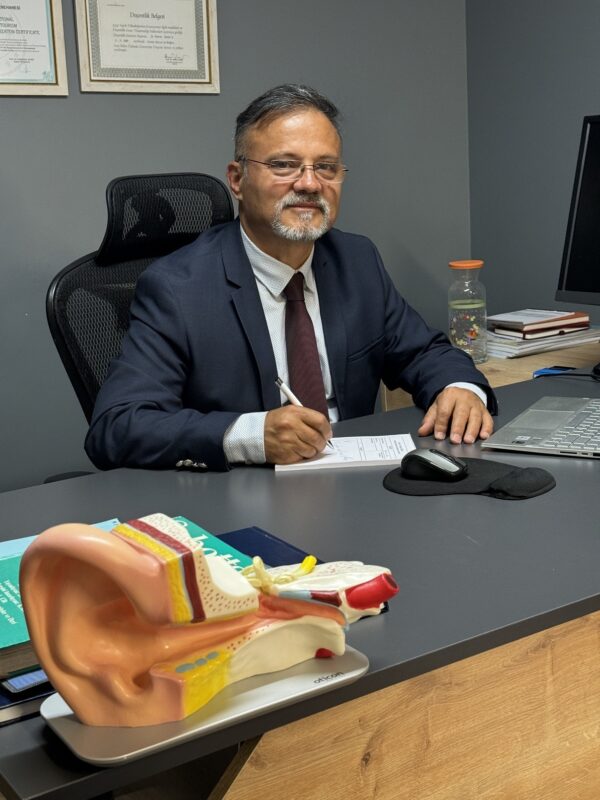
About Me
Prof. Dr. Fehmi Döner
ENT and Head & Neck Surgery Specialist
I completed my primary and secondary education in İzmir. I completed my medical education at Istanbul University Cerrahpaşa Faculty of Medicine in 1988. I received my specialization training at Atatürk University Faculty of Medicine, Department of Otorhinolaryngology. During my specialization training, in order to increase my knowledge and experience, I spent different periods of time at Istanbul University Istanbul Faculty of Medicine, Department of Otorhinolaryngology, and participated in clinical studies.
After receiving my specialization in 1994, I worked at Kütahya State Hospital for eight months, and then in December 1994, I was appointed as an assistant professor to the Department of Otorhinolaryngology at Süleyman Demirel University.
View MoreWhat is open rhinoplasty and how is it performed?
Open technique rhinoplasty is a modern surgical approach that allows the surgeon to have complete control over the nasal structure. To understand this method, let us give a simple example. Imagine that you need to make a very fine adjustment to a car engine, organize the internal cables, and replace certain parts. The closed technique is similar to performing this task without opening the hood, relying only on touch or looking through small openings. The open technique, on the other hand, means fully opening the hood and working while clearly seeing every component and every screw of the engine with the naked eye.
This “opening the hood” process begins with a very small incision made on the skin column located between the two nostrils, which we call the “columella.” This incision is usually not made as a straight line, but rather in the shape of an inverted “V” or a stepped ladder. You may wonder why such a shaped incision is used. While a straight line may leave a more noticeable scar when healed, these geometric shapes refract light, making the scar almost invisible.
After this small incision is made, the nasal skin is gently lifted upward from the underlying bone and cartilage. At that moment, the entire bony and cartilaginous framework of the nose is laid out before the surgeon, just like the illustrations in an anatomy atlas. Where are the deviations? Which cartilage is weak? What is the condition of the ligaments supporting the nasal tip? All of these can be seen with millimetric precision. This visual control leaves no room for surprises and allows intervention based on direct visualization rather than estimation.
What are the main differences between open and closed techniques?
My patients sometimes come with thoughts such as “If I choose the closed technique, I will heal faster and there will be no scars.” However, the reality is a bit different. The main difference between the two techniques lies in the surgeon’s field of vision. In the closed technique, all incisions are made inside the nostrils, and nothing is visible from the outside. However, the surgeon must largely rely on experience and tactile feedback to ensure symmetry of the nasal tip cartilages.
In the open technique, we have binocular vision with depth perception. We can see and compare the right and left sides of the nose simultaneously. Correcting asymmetries, placing millimetric sutures, and reshaping the cartilages proceed in a much more controlled manner with the open technique. Nasal tip aesthetics, in particular, is the most challenging part of this surgery. The cartilages at the nasal tip (alar cartilages) may be highly asymmetrical, very weak, or poorly shaped. To sculpt these structures like a sculptor, the open technique provides the canvas we need.
The main advantages of the open technique can be listed as follows:
- Direct visualization
- Full control
- Precise shaping
- Symmetry control
- Graft fixation
How are breathing problems addressed during surgery?
A large majority of my patients who apply for nasal surgery come not only with aesthetic concerns but also with complaints related to nasal obstruction, such as “I cannot breathe through my nose,” “Doctor, I sleep with my mouth open at night,” or “I wake up tired in the mornings.” As an Ear, Nose, and Throat specialist, breathing is my absolute red line in aesthetics. A nose that does not breathe properly is a failed surgery, no matter how beautiful its shape may be.
During open technique rhinoplasty, we operate not only on the outside of the nose but also on the inside. Correcting deviations of the nasal septum, which is the central wall of the nose, is fundamental. If the septum is deviated to one side, it obstructs the airway on that side. We correct this deviation and also use the cartilage removed from there as “spare parts” to shape the nose. In other words, we achieve two goals with one intervention.
In addition, we repair the “nasal valve,” which is the narrowest and most critical area for airflow. While narrowing the nasal dorsum, we use special cartilage pieces (spreader grafts) to avoid narrowing the airway. These grafts prevent the nasal sidewalls from collapsing inward during breathing and help widen the airway. In the same session, we may also intervene on the turbinates to maximize airway patency. In short, we correct both the internal and external parts of the nose together.
The main factors that cause breathing problems are as follows:
- Septal deviation
- Turbinate hypertrophy
- Nasal valve narrowing
- Nasal polyps
- Allergic rhinitis
Contact us to get information about treatments and create an appointment!
How are preoperative planning and expectations managed?
The secret of a successful surgery is that the surgeon and the patient speak the same language. Everyone’s perception of “beauty” is different. What you define as a “natural” nose may not be the same as my understanding of “natural.” Therefore, the preoperative process is at least as important as the surgery itself.
The preoperative consultation is perhaps the most critical stage of the entire process. In the clinic, we listen to you carefully, examine your face, and take professional photographs. We explain in detail the procedures that can be performed on your nose and demonstrate them using example patients and shapes. We perform millimetric analyses on the photographs we take. Your forehead structure, whether your chin is retruded or protruded, asymmetries between the two sides of your face, your lip structure, and your cheekbones all influence how your nose should look. With the help of computerized simulation programs, we present a possible postoperative outcome on the screen to give you an idea.
Please remember this: simulations are not “commitment” documents but communication tools. They help you visually understand what your surgeon is planning, how much the nasal hump will be reduced, and how much the tip will be lifted. At this stage, it is very important that your expectations are realistic. Our goal is not to turn you into someone else, but to reveal the “best version of you” that suits your face and complements your character. A simulation is a computer-generated sketch to provide an idea, whereas surgery is a hands-on process performed on living tissue that heals over time.
What are the cartilage (graft) sources used in nasal shaping?
The most valuable material we use when reconstructing the nose is cartilage. Foreign materials, silicone, or synthetic fillers do not provide permanent solutions in nasal surgery and carry a risk of reaction. The body’s own tissue is the safest and most compatible material.
Our first and most important source of cartilage is the septal cartilage inside your nose. This cartilage, which we remove while correcting deviations, is an excellent structural material due to its straight and firm nature. We shape and use it to straighten the nasal dorsum, support the tip, and correct deviations.
However, in some cases, especially in patients who have previously undergone surgery (revision cases), septal cartilage may be insufficient or completely absent. In such situations, we seek help from “neighboring” areas. Ear cartilage is naturally curved and soft, making it ideal for shaping the nasal tip or camouflaging deficiencies. If a much stronger and larger amount of cartilage is required, we then resort to rib cartilage obtained through a small incision. A small piece taken from the cartilaginous part located in the anterior and lower portion of the ribs generally does not cause significant problems.
The graft sources we frequently use are as follows:
- Septal cartilage
- Ear cartilage
- Rib cartilage
Get in Touch!
Contact us to get information about treatments and create an appointment!
What does piezo surgery (Ultrasonic Rhinoplasty) add to the process?
With the advancement of technology, our surgical instruments have also evolved. The chisels and hammers that were once used to shape nasal bones have largely been replaced by “Piezo” devices that operate with ultrasonic sound waves.
The principle of piezo surgery is as follows: the device emits vibrations at a specific frequency that can cut only hard tissues such as bone. While these vibrations shape the bone smoothly, like cutting butter, they do not harm the adjacent soft tissues, vessels, nerves, or the nasal lining. The device stops instantly when it comes into contact with soft tissue.
What does this selectivity provide us? First, it allows precise shaping by cutting and sculpting the bones without fracturing them, resulting in much more refined and smooth nasal dorsums. Second, and most importantly for patients, it reduces trauma. Since soft tissues and blood vessels are not damaged, postoperative bruising and swelling around the eyes are significantly reduced. The recovery process is faster, and patients return to their social lives sooner. The open technique provides the wide access necessary for the piezo device tips to reach the bone structure comfortably, making these two methods complement each other perfectly.
How does the approach change in patients with facial asymmetry?
In many of my patients who present with nasal deviation, facial asymmetry is also present. This means that one side of the face is hypoplastic and smaller compared to the other side. Often, the jaw, facial bone, or eye on one side is smaller than on the other. As people inherit genetic traits from various family members, sometimes the bone structures of the face—usually one half—may differ. In some cases, this asymmetry may even be cross-patterned. Just like a house built on a sloped terrain, where the walls are not of equal height, the nasal wings may also differ in length. The wall on the lower side of the slope is longer, while the upper side is shorter; similarly, the nasal wing on the smaller side of the face may be longer and more slanted. Moreover, after a building is constructed on a slope, gravity may cause slight cracks or tilting over time. Different techniques are applied to build a house on a slope. Likewise, we evaluate patients with facial asymmetry through detailed examination and consultation and apply special techniques during surgery to prevent recurrence of deviation. Postoperatively, we also use a nostril equalizing silicone device (nostril retainer) for a certain period. Especially in patients with pronounced facial asymmetry, despite all precautions, minimal nasal deviation or slight nostril asymmetry may recur due to the underlying facial asymmetry.
In cases of facial asymmetry:
- Detailed consultation and planning with the patient
- Thinning of bone thickness on the sloped side
- Use of cartilage grafts
- Creating a stronger nasal skeletal structure
- Often adding nasal base surgery
- Use of a nostril retainer
How does the approach differ in thick-skinned and thin-skinned patients?
Each patient’s skin type is a factor that directly affects the outcome of surgery. No matter how perfectly we construct the underlying framework, the skin covering it will either reveal or conceal the result.
Thick-skinned noses present a unique challenge for surgeons. Thick and oily skin acts like a heavy blanket, masking fine details underneath. In these patients, rather than reducing the size of the nose, it is necessary to strengthen the framework and create a structure capable of supporting the skin. If the cartilages of a thick-skinned nose are reduced excessively, the skin cannot adapt, resulting in an undefined appearance. With the open technique, we have the opportunity to safely thin the thick skin (degloving) without causing damage and to build the underlying structure accordingly. However, the most important point for thick-skinned patients to understand is that the reduction of swelling and the final shaping of the nose will take longer. In some cases, additional anti-edema medication or diluted corticosteroid injections into the subcutaneous tissue may be required.
Thin-skinned noses, on the other hand, are the opposite. Like a fine silk fabric, they reveal even the slightest irregularity or a pinhead-sized bump. Therefore, surgery in thin-skinned patients must be flawless. Bone and cartilage transitions must be smooth, and sharp edges should not be left. We usually camouflage the cartilage framework by covering it with finely minced cartilage paste obtained from inside the nose or with soft tissue layers (fascia) derived from the patient’s own tissues.
Common situations observed in thick-skinned patients include:
- Prolonged swelling
- Less visible details
- Changes in skin quality
- Risk of scar tissue
- Additional medication therapy
What should be considered in nasal tip aesthetics (Tip Plasty)?
The nasal tip is the most noticeable and complex part of nasal aesthetics. It is one of the first areas that draw attention when looking at a face. A drooping nasal tip can make a person appear older and more tired, while an excessively upturned tip can create an artificial expression.
The greatest strength of open technique rhinoplasty becomes evident in the nasal tip. The wing-shaped structures forming the nasal tip, known as the “alar cartilages,” vary from person to person. In some individuals, they are very wide and give the nose a bulbous appearance; in others, they are asymmetrical or very weak.
During surgery, we shape these cartilages using special suturing techniques. We narrow the nasal tip, lift it (rotation), and bring it to a projection that is harmonious with your face. Using an approach we call the “polygon” concept, we aim to create a diamond-like form where light and shadow transitions appear natural on the nasal tip. Our goal is not a pinched appearance, but an elegant nasal tip with natural curves.
What is the recovery process like and what should be considered?
The surgery is complete, and now it is time for recovery. This is the period that patients worry about the most, but thanks to modern technology and techniques, it is now much more comfortable.
You will stay in the hospital for the first night. Keeping your head elevated (using two pillows) is important to reduce swelling and drainage. Cold compresses applied around the eyes help minimize swelling. Do not worry about pain; most of my patients describe a feeling of pressure due to nasal congestion rather than pain. This period can be managed comfortably with simple pain relievers.
We no longer use the long gauze packings inside the nose. Instead, we place soft silicone splints with a central airway (Doyle splints) that allow breathing. Removing them is a matter of seconds, and patients generally do not feel pain.
A thermoplastic splint (cast) will remain on your nose for one week. Around the 7th day, we remove both the splint and the internal silicone supports. That moment is your first encounter with your new nose. It will be swollen and may feel edematous, but the happiness of seeing the change in the mirror is priceless.
During the recovery period, you should avoid the following:
- Using sunglasses
- Excessively hot baths
- Contact sports
- Heavy lifting
- Blowing your nose
Why is revision rhinoplasty a more complex process?
Sometimes things may not go as planned the first time, or you may be dissatisfied with a surgery performed years ago. In such cases, “Revision Rhinoplasty” comes into play. Revision, or corrective surgeries, are technically more challenging than primary surgeries.
Why is that? Because the anatomy has already been altered during the first surgery. Cartilages have been repositioned or removed, and adhesions known as “scar tissue” have formed under the skin. When the surgeon reopens the area, it is impossible to know exactly what will be encountered. Therefore, revision surgery requires a high level of experience and patience.
The open technique is almost mandatory in revision cases. A wide field of view is necessary to safely release the complex internal structures and rebuild the anatomy. In revisions, since the patient’s own septal cartilage is often depleted, rib cartilage is usually required to reconstruct the nasal framework. As is known, the anterior portions of the ribs, especially the lower front areas, consist of cartilage to provide chest flexibility. When needed, we harvest a small piece from this cartilaginous structure, usually from the lower anterior section, prepare it, and use it accordingly. Patients sometimes ask, “Rib cartilage? Isn’t that very difficult?” However, with modern methods, a small piece of rib cartilage allows us to build a strong framework that will support the nose for a lifetime, and any pain in the rib area usually subsides within a few days.
Latest Posts

What Is a Failed Rhinoplasty? How Does It Happen? How Is It Recognized?
Prof. Dr. Fehmi Döner » General » What Is a Failed Rhinoplasty? How Does It [...]
Read More ➜
25
Feb
Feb
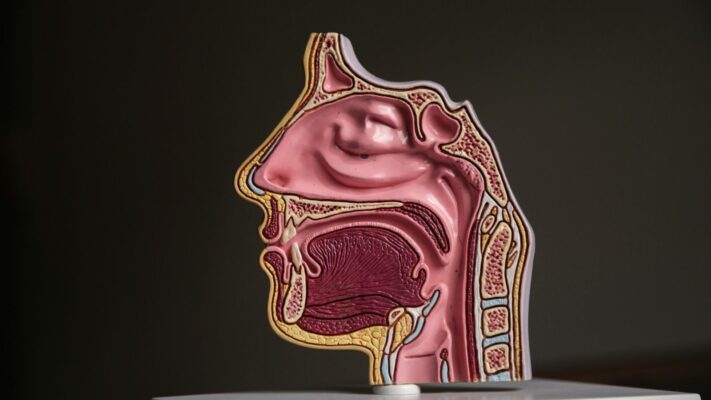
Nasal Anatomy and Its Functions
Prof. Dr. Fehmi Döner » General » Nasal Anatomy and Its FunctionsNasal anatomy consists of [...]
Read More ➜
25
Feb
Feb

What Is a Nose Type and What Are the Different Nose Types?
Prof. Dr. Fehmi Döner » General » What Is a Nose Type and What Are [...]
Read More ➜
25
Feb
Feb
My Nose Is Crooked After Rhinoplasty: What Should I Do?
Prof. Dr. Fehmi Döner » Rhinoplasty » My Nose Is Crooked After Rhinoplasty: What Should [...]
Read More ➜
23
Feb
Feb
Can Asymmetry of the Nostrils Occur After Rhinoplasty?
Prof. Dr. Fehmi Döner » Rhinoplasty » Can Asymmetry of the Nostrils Occur After Rhinoplasty?Asymmetry [...]
Read More ➜
23
Feb
Feb

Nasal Massage After Rhinoplasty
Prof. Dr. Fehmi Döner » Rhinoplasty » Nasal Massage After RhinoplastyNasal massage after rhinoplasty is [...]
Read More ➜
23
Feb
Feb

Swelling on the Nasal Bridge After Rhinoplasty
Prof. Dr. Fehmi Döner » Rhinoplasty » Swelling on the Nasal Bridge After RhinoplastySwelling on [...]
Read More ➜
23
Feb
Feb

What Should Be Considered After Rhinoplasty?
Prof. Dr. Fehmi Döner » Rhinoplasty » What Should Be Considered After Rhinoplasty?What to pay [...]
Read More ➜
23
Feb
Feb