

Natural-looking rhinoplasty in Turkey is a surgical procedure designed to reshape the nose while preserving facial harmony and individual anatomical characteristics. The goal is to refine nasal structure, correct functional issues, and achieve balanced proportions without creating an artificial or over-operated appearance.
Advanced preservation rhinoplasty techniques in Turkey focus on maintaining the natural nasal framework while improving contour, symmetry, and airway function. Modern surgical planning, digital imaging, and minimally traumatic approaches allow surgeons to modify bone and cartilage precisely while protecting surrounding tissues.
Board-certified plastic surgeons in accredited Turkish hospitals perform natural rhinoplasty procedures using internationally recognized safety protocols. Comprehensive preoperative evaluation, individualized surgical strategies, and multidisciplinary medical teams contribute to predictable aesthetic outcomes and reduced complication risks.
Postoperative recovery and aesthetic harmony after rhinoplasty in Turkey depend on proper surgical technique, structured aftercare, and gradual tissue healing. Swelling decreases progressively over several months, allowing the refined nasal shape to integrate naturally with the patient’s facial features.
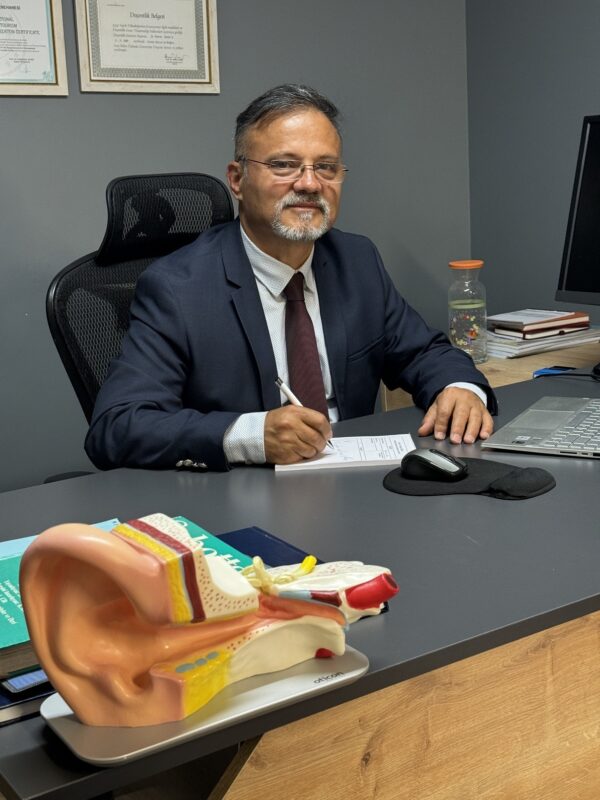
About Me
Prof. Dr. Fehmi Döner
ENT and Head & Neck Surgery Specialist
I completed my primary and secondary education in İzmir. I completed my medical education at Istanbul University Cerrahpaşa Faculty of Medicine in 1988. I received my specialization training at Atatürk University Faculty of Medicine, Department of Otorhinolaryngology. During my specialization training, in order to increase my knowledge and experience, I spent different periods of time at Istanbul University Istanbul Faculty of Medicine, Department of Otorhinolaryngology, and participated in clinical studies.
After receiving my specialization in 1994, I worked at Kütahya State Hospital for eight months, and then in December 1994, I was appointed as an assistant professor to the Department of Otorhinolaryngology at Süleyman Demirel University.
View MoreWhat is the concept of natural rhinoplasty?
When we say “natural,” everyone may picture something different, but medically and aesthetically, naturalness is the integrity of parts that harmonize with each other. Every organ on our face has its own language and character. Since the nose is located at the very center of the face, it is like the conductor of this orchestra. Natural rhinoplasty is about ensuring that this conductor works in harmony with the other instruments without overpowering them.
For a nose to be considered natural, some fundamental features must be preserved. First of all, the light reflection on the nasal dorsum should be uninterrupted. In nature, no nose is perfectly straight as if drawn with a ruler; it has very subtle transitions that are difficult to notice. In addition, the mobility of the nasal tip is very important. When you smile, talk, or purse your lips, your nose should accompany these movements. A rock-hard, immobile nasal tip looks artificial no matter how beautiful its shape is. Our aim is to achieve results that are soft to the touch, flexible in movement, and look like a natural part of the face.
How is the analysis for natural rhinoplasty performed in preoperative planning?
Above all, it is necessary to approach the patient not as “just a nose,” but as a whole. From the moment the patient walks into the clinic, posture, speaking style, facial expressions, and facial anatomy are evaluated as a whole. Because a very beautiful nose can look very bad on the wrong face. For example, in someone with broad shoulders and tall stature, a very small and highly curved nose can disrupt facial proportions and create a comical appearance. Or conversely, in a petite person, a bony and large nose can create a very harsh expression.
At this stage, we benefit from mathematical data and technology. We have analysis parameters in which we examine the face by dividing it into horizontal and vertical sections:
The main areas considered during analysis are:
- Forehead width
- Eyebrow structure
- Intercanthal distance
- Cheekbones
- Lip distance
- Chin tip
- Neck angle
In light of these parameters, simulation studies are carried out on the patient’s photographs. These studies enable the patient’s imagination and the surgeon’s possibilities to meet on common ground. However, I always remind my patients of this: the computer screen is smooth; you can fix everything with the “eraser” key. But human tissue is living, has memory, and sets its own rules while healing. Therefore, simulations provide us with a roadmap but are never a 100% guarantee of the outcome. Realistic expectations are the key to a successful process.
How does Piezo technology improve natural rhinoplasty results?
The technologies we use to create the nose we aim for in rhinoplasty are at least as important as the surgeon’s manual skill. In the past, the hammer, chisel, and breaking procedures that came to mind when rhinoplasty was mentioned have now largely been replaced by a much more delicate and technological method called “Piezo Ultrasonic Rhinoplasty.” Likewise, thinning thick or crooked bony structures has become much easier with small fine burs driven by a micromotor. The biggest feature of the Piezo device is that it is “selective.” It is designed to shape only hard tissue, namely bone.
I can explain what this means as follows: if you touch the Piezo tip to your hand, it does not cut or harm your skin. You could even place it on a balloon and scrape off the plaster layer on it without popping the balloon. However, the moment it touches bone, it shapes it smoothly, as if cutting butter. This sensitivity gives us incredible control in natural rhinoplasty.
In the simplest terms, Piezo is a technology that cuts and shapes bone using sound waves (ultrasonic vibrations). With very small toothed burs attached to the micromotor, which we call a burr, bones can be thinned quickly without breaking. You can think of it like the precise tips a sculptor uses to work the finest details. The greatest miracle of this device is its “tissue selectivity.” The Piezo device recognizes and shapes only hard tissue, bone; when it contacts soft tissues, vessels, nerves, or the delicate mucosa inside the nose, it stops and does not harm them.
Instead of breaking the bones, we shape them by filing and with millimetric cuts, like crafting a piece of jewelry. The biggest benefit of these technologies for the patient is comfort during recovery. Because we do not harm soft tissue and we protect vessels, we see much less of the feared picture of “swelling so much that the eyes close” or “dark bruising on the face” after surgery. Since trauma is minimal, the healing process accelerates, and our patients return to their social lives and work much sooner.
The comforts Piezo and burr use provide to patients are:
- Tissue selectivity
- Millimetric precision
- Minimal trauma
- Less swelling
- Less bruising
- Fast recovery
- Quick return to social life
- Painless process
Contact us to get information about treatments and create an appointment!
What advantages do the Piezo technique and burr use offer us in rhinoplasty?
The main advantages provided by surgery with Piezo and burr are:
- Tissue selectivity
- Millimetric precision
- Minimal trauma
- Fast recovery
- Less bruising
How should the nasal dorsum curve and nasal tip upturn be in rhinoplasty?
Natural rhinoplasty is a rhinoplasty technique in which the nasal dorsum is shaped with a gentle or moderate elegant curve and the nasal tip is defined with upward rotation in ideal proportions suitable for facial anatomy. In other words, it can be summarized as: “The nose will be upturned, but not like a pig nose; there will be a curve on the nasal dorsum, but not like a water slide.” In addition to the dorsum curve and tip lifting, thinning the nasal bones during surgery with fine burs (which we call a burr) or with piezoelectric methods also helps create a youthful and dynamic facial expression.
What are the naturalness criteria in nasal tip aesthetics (tip plasty)?
The nasal tip is the showcase of aesthetic perception. While speaking, people usually look at each other’s eyes and lips; the nasal tip sits right between these two focal points. A non-natural nasal tip can make the entire facial expression look artificial. Especially the “clothespin-squeezed” looking tips from older surgeries, where the nostrils are excessively visible from the front, are the primary appearance we must avoid.
In modern surgery, when shaping the nasal tip, we apply the principle of “repositioning” rather than “cutting away.” The cartilages at the nasal tip are very valuable, and the more we preserve them, the more natural the nose looks. Instead of cutting and reducing the cartilages, we shape them with special suture techniques by bending them, changing their angle, or bringing them closer together.
In addition, we use invisible supports to prevent the nasal tip from drooping over time. However, it is very important that these supports are flexible. The nasal tip should not be as hard as wood. When you make facial expressions and smile, the nasal tip should also move.
The points we pay attention to in nasal tip aesthetics are:
- Flexibility
- Symmetry
- Ideal projection
- Appearance of the nostrils
- Lip angle
Does skin structure and thickness make the natural rhinoplasty process more difficult?
As surgeons, the only variable that challenges us the most and that we cannot control is the patient’s skin structure. Skin is like a cover that drapes over the skeletal framework we create. If this cover is very thin (thin skin), it can reflect even the smallest mistake, a sanding mark, or a suture knot. Thin-skinned patients require a technically flawless surgery. In these patients, we place “camouflage” layers under the skin to slightly thicken it and cover imperfections.
In the opposite case—thick and oily skin—the process works differently. Thick skin tends not to show details no matter how fine and delicate the work underneath is. You can think of it like a small object placed under a thick quilt not being visible from the outside. Therefore, in thick-skinned patients, we make the nasal framework a bit more defined and stronger so it can resist the weight of the skin and allow the shape to emerge.
It is possible to achieve naturalness in both skin types, but the approach and healing times are different.
Factors that vary according to skin type are:
- Duration of swelling
- Cartilage visibility
- Healing speed
- Scar tissue formation
- Time for results to settle
Which face types and skin structures are more suitable?
Everyone has a nose shape in mind, but as physicians, our most important responsibility is to bring the patient’s anatomical realities and dreams onto the same plane. For example, since the Barbie Nose has a very bold and specific form, it may not “perfectly” fit every facial structure or every skin type. Many patients may see this type of result as very artificial. We generally see the most successful outcomes of this procedure in patients with certain anatomical features.
For a rhinoplasty with a very upturned tip and a highly curved dorsum, the ideal candidates typically have the following features:
- Fine facial features
- Oval face shape
- Prominent cheekbones
- Small chin structure
- Thin skin structure
For those with thick skin who like naturalness, this technique is not very suitable. In rhinoplasty surgeries, skin quality is one of the most critical factors that determines our surgical success and how much the postoperative result will be reflected. In thin-skinned patients, the millimetric thinning we do on bone and cartilage during surgery, the elegant curves, and sharp transitions show clearly under thin skin. As if a very thin, smooth silk cover has been laid over it, all the details underneath become visible and the desired appearance emerges.
However, in thick-skinned patients, the situation requires a slightly different approach. A thick, oily, and porous skin structure tends, unfortunately, to mask the underlying skeletal framework. You can compare this to covering a highly detailed sculpture with a thick quilt; the details disappear and the lines soften. In thick-skinned patients, achieving those sharp lines can be more challenging, and it can take up to two years for postoperative swelling to subside and for the nose to take its final shape. Therefore, during the examination, we analyze your skin’s elasticity, thickness, and oil content in great detail. If your facial bone structure and skin have the capacity to tolerate this form change, results can truly be quicker and more impressive. In thick-skinned patients, making a different planning that is suitable for your skin is the most correct approach.
Get in Touch!
Contact us to get information about treatments and create an appointment!
How is natural rhinoplasty supported with diced cartilage (dice)?
To eliminate small irregularities on the nasal dorsum or tip, we sometimes need filler materials. However, using synthetic fillers or foreign bodies carries a long-term risk of infection and reaction. At this point, the method known as the use of diced cartilage, which we call dice, comes into play.
The essence of the method is this: we take the patient’s own cartilage (usually septum or ear) and mince it into millimetric sizes. We bring these minced cartilages to a paste-like consistency with the patient’s own blood. We obtain a natural filler. We place this mixture onto the depressed parts of the nose, the dorsum, or the sidewalls as if injecting with a small syringe. Like a road grader, we smooth out irregularities where cartilage has been added and obtain a smooth, straight nasal dorsum.
Over time, these living cartilage cells remain there and integrate with the body. They form a solid cartilaginous structure. As a result, a natural contour is obtained that feels soft to the touch and is composed entirely of the patient’s own tissue.
The situations in which this method is used are:
- Nasal dorsum depressions
- Thin-skin camouflage
- Concealing mild deviations
- Augmenting the nasal root
- Filling the edge and front of the nasal tip
- Covering the edges of cartilage grafts
Does breathing function improve together with natural rhinoplasty?
As an ENT specialist, my unchanging rule is this: a nose that cannot breathe is a failure, even if it is the most beautiful nose in the world. Rhinoplasty is not performed only to change external appearance; all obstacles that block the airway must also be removed in the same session. In fact, in modern techniques, some procedures done for aesthetics also make breathing easier.
Problems such as cartilage deviation inside the nose (deviation), swelling of the turbinates (concha), or weakness of the nasal wings are solved in the same operation. Especially the narrowest regions where air passes while breathing, which we call the “valve,” are widened with protective surgical techniques. After surgery, our patients often say, “For the first time in my life, I felt like I could breathe all the way into my lungs.” Natural rhinoplasty respects the functional capacity of the nose and preserves it.
The structures that are functionally addressed are:
- Septum
- Inferior turbinates
- Internal valve region
- External valve region
- Sinus channels
Open technique or closed technique: which should be chosen for natural rhinoplasty?
This is one of the topics that confuses patients the most. On social media or forums, you may see definite judgments such as “Closed technique is better” or “Open technique is more guaranteed.” However, in medicine there is no disease, there is a patient. Both techniques have their own advantages and areas of use.
In the open technique, a very small incision is made on the skin between the nostrils, and the nasal skin is lifted so that the entire structure is seen with the naked eye. This provides the surgeon with millimetric control. Especially in patients with nasal tip asymmetry, previous surgery, or significant deviation, the open technique is more reliable for an “unsurprising” result. If the incision scar is sutured properly, it becomes almost invisible within months.
In the closed technique, all incisions are made inside the nose. There is no scar outside. Since the ligaments and vascular structures are less traumatized, tip sensation returns sooner and swelling may subside a bit faster. However, the field of view is limited.
As surgeons, instead of being fanatics of a single technique, we apply what the patient’s nose needs.
Factors that affect technique selection are:
- Nasal tip asymmetry
- Degree of deviation
- Skin structure
- History of previous surgery
- Surgeon’s experience
What happens during the recovery period after natural rhinoplasty?
The postoperative period is the part our patients worry about the most. We often encounter questions like “Will I have a lot of pain?” and “Will my face become unrecognizable?” First, it should be stated that rhinoplasty is not a painful surgery. Most of our patients do not even need painkillers. The biggest complaint is nasal congestion in the first few days due to swelling inside the nose and silicone splints. This is similar to the feeling you have when you have a severe cold.
The first 48 hours are when swelling is most intense. Keeping the head elevated and applying ice during this period is very important. At the end of the first week, the plastic splint on the nose and the silicone splints inside are removed. That is the moment the patient first sees their nose. However, this image should not mislead you because the nose is still swollen. In natural rhinoplasty, patience is the most important medicine of the process. After rhinoplasty, the swelling of the bony part of the nose subsides first due to vascular structures. The nasal tip is the farthest endpoint of lymphatic circulation in the face. Therefore, the last place where swelling leaves the body is the nasal tip. While swelling on the nasal dorsum subsides in a few weeks, it takes time for the fine details at the nasal tip to appear and for the skin to adhere fully to the cartilage.
The approximate healing timeline is:
- First month: About 60–70% of the swelling has subsided. In social life, it is not very obvious that you had surgery. However, when you touch it, you may find the tip firm and the nose numb. You may have numbness in your upper teeth.
- 3rd month: Coarse swelling completely resolves, and when you take photos, your nose begins to look more refined.
- 6th month: The nasal tip starts to soften, loss of sensation fully improves, and fine details become apparent.
- 1st year: Your nose has taken its final shape. We call this “the nose settling.”
The nose fully taking shape, the skin thinning, and the fine details emerging may take from 6 months to 1 year depending on the person’s skin structure. In thick-skinned patients, this process can take 1.5–2 years.
During this period, you may see your nose more swollen in the mornings and more reduced in the evenings. These fluctuations are a natural part of healing physiology.
Things to avoid during recovery are:
- Sunlight
- Wearing glasses
- Heavy sports
- Hot baths
- Activities with a risk of impact
Is planning natural rhinoplasty different in male patients?
Male rhinoplasty requires a much more delicate balance than in women. While slightly curved, slightly upturned, and refined noses are considered aesthetic in women, these features can lead to a “feminine” expression in a man. A man’s biggest fear is that after surgery his facial expression will soften and his masculine lines will be lost.
Therefore, in male patients we apply “masculine” rhinoplasty principles. The nasal dorsum is generally left straight (without a curve) or with a very slight curve. The angle between the nasal tip and the lip is kept around 90–95 degrees, meaning the tip is not lifted too much. In addition, the bony structure of the nose having a certain width is necessary for a strong expression. An overly narrowed nose does not look natural on a male face.
The goals in male rhinoplasty are:
- Straight or very slightly curved nasal dorsum
- Strong profile
- Ideal nasolabial angle
- Preserved nasal width
- Sharp lines
Can natural results be achieved with ethnic rhinoplasty?
Genetic traits of people from different geographies are reflected in their nasal structures as well. The anatomy of patients of Asian, African, or Middle Eastern origin differs greatly. In ethnic rhinoplasty, our core philosophy is to achieve a more aesthetic form without erasing the patient’s origin, identity, and characteristic features. Trying to create a Northern European nose for a patient of African origin is both technically very difficult and will never look harmonious with the face; therefore, it becomes far from “natural.”
For example, in Asian-type noses, the nasal root is often low and tip support is weak. In these patients, it is necessary to raise and define the nose by adding cartilage (augmentation). Conversely, in the Middle East, humped and droopy-tip noses are common; here, lowering the hump and lifting the tip are the main focus.
Methods used in ethnic rhinoplasty are:
- Cartilage grafts
- Nasal wing narrowing
- Nasal root augmentation
- Skin thinning procedures
Why are the golden ratio and mathematical analyses so important in the design stage?
Seeing rhinoplasty only as an art is an incomplete perspective; there is very serious mathematics and geometry behind this work. For a sculptor, clay is what facial tissues are for us; however, the rules of our art are based on universal beauty formulas, namely the Golden Ratio (). It is not enough to make a nose beautiful on its own; the relationship of that nose with the chin, lips, eyes, and forehead must be in perfect harmony.
The angles we target in Barbie nose aesthetics operate at the upper limits of traditional measurements. Adjusting these angles precisely is critical for the result to look both aesthetic and natural. For example, the nasolabial angle, which is the opening between the nasal tip and the upper lip, is accepted as an ideal aesthetic range of to degrees in women, while in the Barbie concept we move this angle to the higher degree band. This advanced degree difference may look small on paper, but the change it creates on the face and the aura it adds are tremendous.
This increase in rotation makes the nose look more upturned and dynamic. However, there is a very fine line here, and the surgeon’s experience comes into play. Each degree of increased rotation optically lengthens the upper lip distance to some extent. If this balance is not established well, the lip distance may look too long. Likewise, the nasofrontal angle—the transition between the forehead and the nasal root—also has critical importance. By keeping this angle within a certain range, we ensure that the transition from forehead to nose is smooth and flowing, not harsh and sharp. By analyzing the face in horizontal and vertical planes, we aim for the nose to look thinner and more refined especially in the distance between the two eyes (midface). In short, there is no such thing as “by eye” in aesthetic surgery; behind every millimeter lies serious calculation.
What does the preoperative simulation process provide for the patient?
A successful aesthetic operation actually begins long before entering the operating room, in the examination room. The biggest concern of our patients is usually uncertainty. Questions such as “Will it suit my face?”, “Will it be too upturned?”, and “Will it be the way I want?” occupy the mind. To eliminate this uncertainty and create a common language, we use computer (digital simulation) systems, the greatest opportunity technology offers us.
In this process, we design the possible postoperative appearance of the nose based on the patient’s high-resolution photographs. This stage is vital for the expectations of the surgeon and the patient to overlap. Perhaps you want a beautiful nose that looks completely natural and allows comfortable breathing, but also does not obviously look like it has been operated on. Or you may want what we call “Semi-Barbie,” a more natural yet still stylish transition; or perhaps you imagine a bold style we call “Full Barbie,” where the curve and upturn are more pronounced. Simulation makes these terms tangible.
We transparently discuss how compatible the nose we design on the screen is with the patient’s existing anatomical infrastructure and what we can and cannot do during surgery. While digital planning removes question marks from the patient’s mind, it also gives us the chance to draw a millimetric roadmap to follow during surgery. However, it should be remembered that simulation is not a promise but a goal. The healing process on living tissue can always show personal differences. In other words, preoperative computer-assisted simulation gives an idea, but it is not identical to the surgery one-to-one.
How is a nose obtained that both looks good and breathes healthily?
As an ENT specialist, I have an unchanging rule: “A nose that cannot breathe is a failure, no matter how beautiful it is.” In rhinoplasty, we reduce, narrow, and refine the nose. If these procedures are not planned correctly, they may carry a risk of narrowing the airways. Inside the nose, there are very critical angles and valve-like structures that we call the “nasal valve,” which regulate airflow during breathing. Especially the internal nasal valve is responsible for more than half of nasal resistance.
When we plan this surgery, we reconstruct not only the external appearance but also the internal airways. To prevent collapse of these valve regions while narrowing the nose, we place cartilage supports called “Spreader Graft” or “Spreader Flap,” supporting the airway like a tent pole. In this way, we secure airway patency.
Also, as an interesting detail, strengthening the nasal tip and lifting it according to the patient’s desire in rhinoplasty can actually be a factor that facilitates breathing when done correctly. Upward rotation of the nasal tip widens the air entry angle, allowing air to enter more easily. If our patient has problems that block breathing, such as bony deviation (deviation) or turbinate enlargement (concha hypertrophy), we correct these in the same session (Septorhinoplasty) and ensure that the patient breathes much more comfortably and with higher quality after surgery than before. In other words, aesthetics and function are handled together like two complementary puzzle pieces.
What measures are taken to prevent the nasal tip from drooping over time?
One of the most common questions our patients ask is, “Doctor, will my nasal tip droop after surgery?” This concern is not unfounded because in older techniques the nasal tip was entrusted only to the skin and weak ligaments and could succumb to gravity. However, in modern nasal surgery, we place the nasal tip (tip plasty) on foundations as solid as a rock.
The main support methods we use are:
- Columellar Strut
- Tongue-in-groove
- Tip Grafting
- Shield Graft
To ensure that the elegant and, if desired, upturned posture of the nasal tip is preserved for life, we redesign the cartilage architecture. We place strong cartilage supports (Columellar Strut) taken from the septum onto the columella, the central pillar of the nose. This serves as the load-bearing column of the nose. In addition, with the method we call “Tongue-in-groove,” we “fix” the nasal tip to the septal cartilage with strong sutures. Thanks to these techniques, the nasal tip becomes highly resistant to gravity.
However, it should also be stated honestly that due to tissue healing and the effect of gravity, there may physiologically be a settling margin in the nasal tip within the first year. While making our surgical plan, we take this settling margin into account and position the nose slightly higher than the ideal target position. Thus, when the healing process is completed and the nose settles, it becomes fixed at the perfect angle we aimed for.
How does the healing process progress and what should be considered?
The healing process after rhinoplasty is a journey that requires patience but is worth it for its outcome. When the surgery ends, it does not mean everything is finished; in fact, a new process begins. Thanks to Piezo and micromotor technology, our patients now experience the first week, which we call the “acute period,” much more comfortably. After surgery, there is a thermoplastic splint on your nose and silicone splints inside that allow you to breathe. These are usually removed at the end of the first week.
Factors that speed up the healing process are:
- Regular ice application
- Sleeping with the head elevated
- Salt restriction
- Drinking plenty of water
- Doctor follow-ups
Bruising and swelling are much less than in the past thanks to tissue-protective techniques and usually subside enough to return to social life, school, or work within 10 days. However, the real healing—meaning the “maturing” of the nose—takes time. By the end of the first month, most of the swelling has subsided and the general contours of the nose emerge. During this period, you can start light walks, but heavy sports should be avoided.
Between the third and sixth months, the nasal tip begins to soften, any loss of sensation improves, and refined nasal lines become clear. The final result, which we call the “Final Contour,” takes a full year to settle. In thick-skinned patients, this process may take a bit longer. During this process, I always tell my patients: “Rhinoplasty is done in one day, but it heals in one year.” Being patient, applying decongesting massages, staying away from smoking and alcohol, and protecting the nose from trauma are the most important patient responsibilities that crown the surgeon’s success.
Is there a chance for natural rhinoplasty in revision surgeries?
We call corrective surgeries performed for patients who have had surgery before but are not satisfied with the result or have breathing problems “revision rhinoplasty.” These surgeries are technically more difficult than primary surgeries because the natural anatomy inside has been disrupted, cartilage reserves have been depleted, and skin adhesions have formed. However, this does not mean that a natural result cannot be achieved.
In revision surgery, our greatest weapon is “rib cartilage.” If there is not enough cartilage left inside the nose to shape it, we almost rebuild the nose with a small piece of cartilage taken from the patient’s own rib. We work and shape these cartilages so finely that from the outside, or to the touch, they feel like a part of the patient’s own nose. In revision surgeries, the goal is not only to correct the shape but also to restore lost support and function.
Situations requiring revision are:
- Nasal tip drooping
- Breathing problems
- Over-scooped nasal dorsum
- Asymmetries
- Nasal wing collapse
Latest Posts

What Is a Failed Rhinoplasty? How Does It Happen? How Is It Recognized?
Prof. Dr. Fehmi Döner » General » What Is a Failed Rhinoplasty? How Does It [...]
Read More ➜
25
Feb
Feb
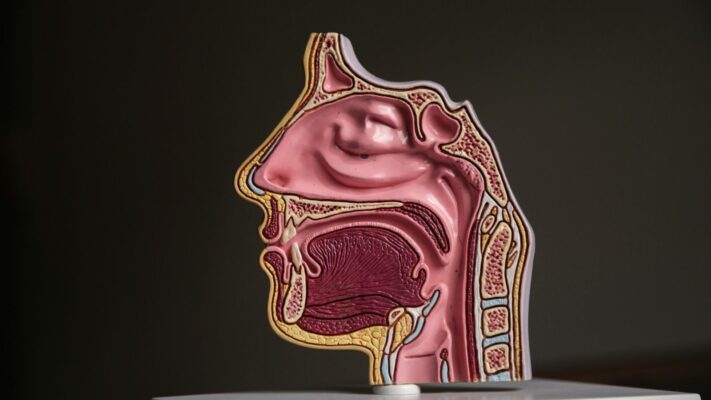
Nasal Anatomy and Its Functions
Prof. Dr. Fehmi Döner » General » Nasal Anatomy and Its FunctionsNasal anatomy consists of [...]
Read More ➜
25
Feb
Feb

What Is a Nose Type and What Are the Different Nose Types?
Prof. Dr. Fehmi Döner » General » What Is a Nose Type and What Are [...]
Read More ➜
25
Feb
Feb
My Nose Is Crooked After Rhinoplasty: What Should I Do?
Prof. Dr. Fehmi Döner » Rhinoplasty » My Nose Is Crooked After Rhinoplasty: What Should [...]
Read More ➜
23
Feb
Feb
Can Asymmetry of the Nostrils Occur After Rhinoplasty?
Prof. Dr. Fehmi Döner » Rhinoplasty » Can Asymmetry of the Nostrils Occur After Rhinoplasty?Asymmetry [...]
Read More ➜
23
Feb
Feb

Nasal Massage After Rhinoplasty
Prof. Dr. Fehmi Döner » Rhinoplasty » Nasal Massage After RhinoplastyNasal massage after rhinoplasty is [...]
Read More ➜
23
Feb
Feb

Swelling on the Nasal Bridge After Rhinoplasty
Prof. Dr. Fehmi Döner » Rhinoplasty » Swelling on the Nasal Bridge After RhinoplastySwelling on [...]
Read More ➜
23
Feb
Feb

What Should Be Considered After Rhinoplasty?
Prof. Dr. Fehmi Döner » Rhinoplasty » What Should Be Considered After Rhinoplasty?What to pay [...]
Read More ➜
23
Feb
Feb