

Hump nose rhinoplasty in Turkey is a surgical procedure designed to correct a prominent nasal hump by reshaping the nasal bone and cartilage to create a smoother and more balanced nasal profile. The operation improves facial harmony while preserving natural nasal function and structural stability.
Hump nose rhinoplasty procedure in Turkey focuses on reducing dorsal nasal prominence through precise surgical techniques that modify bone and cartilage structures. Surgeons evaluate facial proportions, nasal anatomy, and skin thickness to achieve a natural contour and maintain both aesthetic balance and functional breathing.
Cost of hump nose rhinoplasty in Turkey is generally more affordable compared with many European and North American countries while maintaining internationally recognized medical standards. Accredited clinics, experienced plastic surgeons, and modern surgical facilities contribute to consistent and reliable outcomes.
Recovery after hump nose rhinoplasty in Turkey typically involves mild swelling and bruising that gradually decreases within several weeks. Patients usually return to daily activities within a short period, while final nasal shape continues to refine over several months as tissues heal and settle naturally.
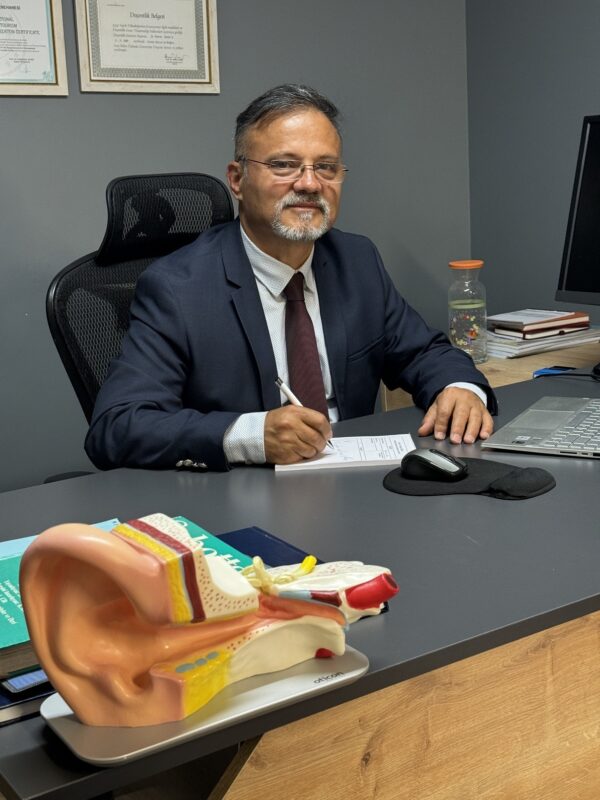
About Me
Prof. Dr. Fehmi Döner
ENT and Head & Neck Surgery Specialist
I completed my primary and secondary education in İzmir. I completed my medical education at Istanbul University Cerrahpaşa Faculty of Medicine in 1988. I received my specialization training at Atatürk University Faculty of Medicine, Department of Otorhinolaryngology. During my specialization training, in order to increase my knowledge and experience, I spent different periods of time at Istanbul University Istanbul Faculty of Medicine, Department of Otorhinolaryngology, and participated in clinical studies.
After receiving my specialization in 1994, I worked at Kütahya State Hospital for eight months, and then in December 1994, I was appointed as an assistant professor to the Department of Otorhinolaryngology at Süleyman Demirel University.
View MoreHow does an aquiline nose structure form?
The hump you see on the nasal bridge is not actually a single block of bone. We can compare nasal anatomy to the roof of a house. The upper part of this roof consists of hard bone structures, while the lower part contains more flexible cartilage structures. The protrusion we call the hump occurs exactly at the transition point where these two different materials meet. In some people, this excess is more bone-dominant, while in others cartilage tissue is more prominent. This distinction is one of the most fundamental factors determining the technique used in surgery.
Sometimes we also encounter a condition we call a “pseudo hump.” This is quite an interesting visual illusion. In reality, there is no massive bone that needs to be removed from the nasal bridge; however, the area between the eyebrows may be so deep or the nasal tip may be so low that the dorsum appears much higher and more hump-shaped than it actually is. At this point, the fascinating mathematics of surgery comes into play. Simply shaving the hump is not enough; the starting and ending points of the nose must also be balanced.
The anatomical components contributing to hump formation are:
- Excessive growth of the nasal bones
- Height of the dorsal septal cartilage
- Thickness of the upper lateral cartilages
- Depth of the nasal root
- Weakness of nasal tip support
Why is facial analysis critical before surgery?
Just as a sculptor completes the artwork in their mind before striking the marble, planning is everything in rhinoplasty surgery. The biggest misconception is thinking that aquiline nose surgery is simply about “cutting off” the hump. If you only remove the hump and create a flat bridge, you disconnect the nose from its relationship with the face. Every face has its own story and proportions:
Gender is especially decisive here. In female patients, a slightly curved, elegant dorsum with soft transitions is desired, whereas in male patients, a straighter, more masculine and stronger bridge is targeted. In addition, the width of the forehead, the prominence of the cheekbones, and most importantly the position of the chin are reference points that determine how much of the hump should be removed. For example, in a patient with a recessed chin, making the nose too small or overly curved may further emphasize the imbalance in the lower half of the face. Therefore, 3D simulations and detailed photo analyses help align the patient’s dreams with what the surgeon can achieve.
The main parameters evaluated in facial analysis are:
- Nazofrontal angle
- Nasolabial angle
- Chin projection
- Skin thickness
- Facial asymmetry
How has piezo surgery revolutionized bone shaping?
In the past, the first image that came to mind with rhinoplasty was bruised eyes and a swollen face. The main reason was the use of rough instruments like chisels and hammers when working on bones. These tools inevitably damaged surrounding tissues while breaking the bone. However, with technological advancements, Piezo ultrasonic bone-shaping devices entered our practice and completely changed this scenario.
You can think of Piezo technology as a highly precise artistic instrument. The greatest feature of this device, which works with sound wave vibrations, is that it is “selective.” The tip only recognizes hard tissue, namely bone. Even if it accidentally touches the skin, vessels, or nerves, it does not cut soft tissue or cause damage. This minimizes bleeding, reduces trauma, and as a result, patients no longer face the feared “panda eye” appearance after surgery. It also allows us to shape the bone millimetrically, as if smoothing it with sandpaper rather than breaking it.
The main advantages of piezo surgery are:
- Minimal soft tissue damage
- Very little bruising and swelling
- Millimetric cutting precision
- Controlled bone shaping
- Faster recovery process
How is the hump corrected with preservation rhinoplasty?
In traditional methods, the hump on the nasal bridge was removed like cutting off the peak of a roof. This eliminated the hump but left behind an “open roof” structure. The surgeon then had to break and bring the side walls closer together to close this gap. Although this method is still valid and successful, it sometimes led to irregularities during healing because it disrupted the natural anatomy. The increasingly popular philosophy of “Preservation Rhinoplasty” approaches the issue from a completely different angle.
We can explain this technique with a simple elevator example. Imagine that the top floor of a building (the hump) is too high; instead of demolishing the roof, you remove a piece from the foundation (the septum) and lower the entire building down by one floor. This is exactly what we do in preservation rhinoplasty. Without touching the natural smooth bone and cartilage structure of the dorsum, we remove thin strips from the internal supporting walls and gently push the entire bridge downward toward the facial plane.
Thus, the natural light and shadow lines of the nasal dorsum remain intact, cartilage integrity is preserved, and healing is much faster. Of course, not every nose is suitable for this technique; but in appropriate patients, the results are extremely natural and satisfying.
Ideal candidates for preservation rhinoplasty include those with:
- Thin or medium-thickness skin
- A straight nasal axis
- A medium-sized hump
- No previous nasal surgery
- Symmetrical bone structure
Contact us to get information about treatments and create an appointment!
Is breathing function at risk when removing the hump?
Rhinoplasty is not just a beautification procedure but also a serious functional surgery. In fact, aesthetic and function are often inseparable. In many aquiline noses, septal deviations or enlarged turbinates already exist. More importantly, there is a risk of narrowing the airway during hump removal.
When the nasal roof is lowered, the “valve” angle, which is the narrowest part of the airway, may become tighter. To prevent this, the surgeon must perform not only aesthetic but also engineering calculations. After removing the hump, we use special supports called “Spreader Grafts,” prepared from the patient’s own cartilage. These cartilages are placed along both sides of the nasal roof, widening and supporting it like tent poles. This expands the airway and allows the patient to breathe much more comfortably. Aesthetic success is only achieved if breathing is also comfortable.
Methods used to preserve and improve breathing function include:
- Spreader graft application
- Spreader flap technique
- Septoplasty
- Turbinate radiofrequency procedure
- Valve surgery
How does nasal tip drooping affect the hump appearance?
When profile photos of patients with aquiline noses are examined carefully, many also have a drooping nasal tip. This creates a seesaw effect in profile balance: the lower the tip, the higher and more prominent the hump appears. Sometimes simply lifting the nasal tip into the ideal position can significantly reduce the perception of a hump.
However, lifting the tip is not enough; it must be supported permanently. Gravity, aging, and facial muscles tend to pull the tip downward. If adequate structural support is not provided, the tip may droop again within a few years, and the unwanted hump appearance (or parrot beak deformity) may return. To prevent this, we add strong cartilage supports called “Septal Extension Grafts” to the septum. These supports reinforce the nasal tip like a concrete structure and prevent it from drooping over time.
Factors causing nasal tip drooping (tip ptosis) include:
- Weak lower lateral cartilages
- Heavy and thick nasal skin
- Excessive activity of nasal tip muscles
- Traumatic deformities
- Aging process
Should open or closed technique be preferred in aquiline nose rhinoplasty?
This is one of the most confusing questions for patients. On social media and forums, you may find enthusiastic supporters of both techniques. However, in medicine there is no “best technique,” only “the most appropriate technique for that patient.” The surgeon’s duty is to choose the right key for the patient’s anatomy.
The closed technique is performed entirely through incisions inside the nostrils, leaving no external scar. It is advantageous in preserving ligaments, vessels, and nerves of the nasal tip, resulting in less swelling, minimal numbness, and faster healing. Especially when performing preservation rhinoplasty (Let-down), the closed approach is an excellent tool for maintaining naturalness.
The open technique is based on a small incision between the nostrils, allowing the nasal skin to be lifted. This gives the surgeon full visibility of all structures and precise control. In cases of severe deviation, revision surgery, or complex tip reshaping, the open technique is indispensable. The incision scar fades over time and becomes nearly invisible, so it should not be a major concern.
Factors influencing technique selection include:
- Size of the hump
- Nasal tip asymmetry
- Skin structure
- Revision status
- Degree of septal deviation
Get in Touch!
Contact us to get information about treatments and create an appointment!
How does the recovery process and swelling management affect the patient?
When surgery is finished, only half of the process is complete; the other half is the recovery period that requires patience. Patients often fear pain immediately after surgery, but rhinoplasty is surprisingly painless. Most of our patients state they did not even need painkillers. The greatest discomfort in the first few days is the feeling of nasal congestion.
The long gauze packings used in the past are now history. Today, we use silicone splints that are perforated to allow breathing and have a smooth structure, so removal is painless. The first 3 days are when swelling peaks, making cold compresses and keeping the head elevated very important. At the end of the first week, the splint and tampons are removed. That moment is the patient’s first meeting with their new nose.
However, it must be remembered that the nose seen when the splint comes off is not the final result. The nose is still swollen and details have not settled. In thin-skinned patients, full shaping takes 6 months to 1 year, while in thick-skinned patients this process may take up to 2 years. During this period, lymphatic massages play a critical role in reducing swelling. Healing is a marathon, not a sprint.
Recommendations that accelerate recovery include:
- Regular cold application
- Keeping the head elevated
- Low-salt diet
- Plenty of water intake
- Regular nasal rinses
- Anti-swelling supplements
- Use of prescribed creams
Is there a risk of the hump forming again?
“Doctor, will my hump come back?” is perhaps the most common concern we hear. Medically, it is not possible for removed bone or cartilage to regrow to its previous size. However, the body’s healing response can sometimes be confusing.
In areas where bone is filed or cut, the body may produce “callus” (bone healing tissue). This can appear as a firm swelling during the first months. Patients often interpret this as “my hump has returned.” However, this is usually temporary and disappears over time with proper massage techniques. Thanks to piezo surgery’s ability to create a smooth surface and our respectful approach to the periosteum, this risk is minimal today.
In very rare cases, if the firmness becomes permanent, a small 5–10 minute refinement procedure (touch-up) under local anesthesia can completely correct it after at least 6–9 months. With meticulous surgery and proper follow-up, this need is quite unlikely. The key is staying in communication with your surgeon and not missing check-ups.
Latest Posts

What Is a Failed Rhinoplasty? How Does It Happen? How Is It Recognized?
Prof. Dr. Fehmi Döner » General » What Is a Failed Rhinoplasty? How Does It [...]
Read More ➜
25
Feb
Feb
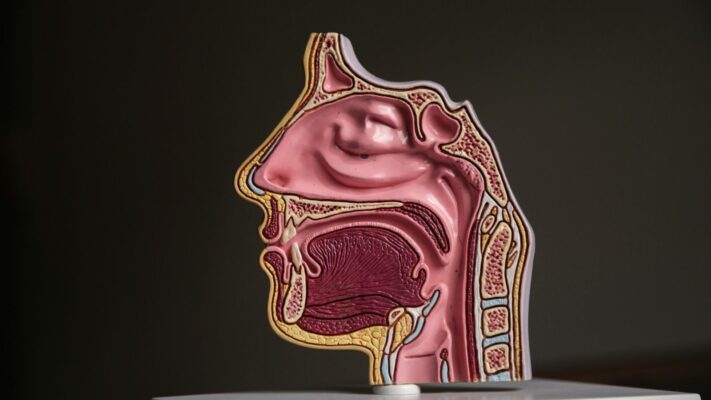
Nasal Anatomy and Its Functions
Prof. Dr. Fehmi Döner » General » Nasal Anatomy and Its FunctionsNasal anatomy consists of [...]
Read More ➜
25
Feb
Feb

What Is a Nose Type and What Are the Different Nose Types?
Prof. Dr. Fehmi Döner » General » What Is a Nose Type and What Are [...]
Read More ➜
25
Feb
Feb
My Nose Is Crooked After Rhinoplasty: What Should I Do?
Prof. Dr. Fehmi Döner » Rhinoplasty » My Nose Is Crooked After Rhinoplasty: What Should [...]
Read More ➜
23
Feb
Feb
Can Asymmetry of the Nostrils Occur After Rhinoplasty?
Prof. Dr. Fehmi Döner » Rhinoplasty » Can Asymmetry of the Nostrils Occur After Rhinoplasty?Asymmetry [...]
Read More ➜
23
Feb
Feb

Nasal Massage After Rhinoplasty
Prof. Dr. Fehmi Döner » Rhinoplasty » Nasal Massage After RhinoplastyNasal massage after rhinoplasty is [...]
Read More ➜
23
Feb
Feb

Swelling on the Nasal Bridge After Rhinoplasty
Prof. Dr. Fehmi Döner » Rhinoplasty » Swelling on the Nasal Bridge After RhinoplastySwelling on [...]
Read More ➜
23
Feb
Feb

What Should Be Considered After Rhinoplasty?
Prof. Dr. Fehmi Döner » Rhinoplasty » What Should Be Considered After Rhinoplasty?What to pay [...]
Read More ➜
23
Feb
Feb