

Male rhinoplasty in Turkey is a specialized cosmetic and functional nasal surgery designed to improve nasal shape while preserving masculine facial characteristics. The procedure focuses on correcting structural deformities, enhancing nasal symmetry, and maintaining strong, natural contours appropriate for male facial anatomy.
Cost of male rhinoplasty in Turkey is considered highly competitive compared with many Western countries, while maintaining international medical standards. Accredited clinics, experienced plastic surgeons, and modern surgical technologies allow patients to receive comprehensive care with safe procedures and predictable aesthetic outcomes.
Male rhinoplasty recovery process in Turkey generally includes a short hospital stay and structured postoperative monitoring. Most patients resume normal daily activities within one to two weeks, while final nasal contours gradually stabilize over several months as swelling subsides and tissues heal.
Male rhinoplasty clinics in Turkey offer individualized surgical planning based on facial proportions, nasal structure, and patient expectations. Preoperative assessment, digital imaging, and detailed surgical techniques help achieve balanced nasal refinement without compromising breathing function or masculine facial harmony.
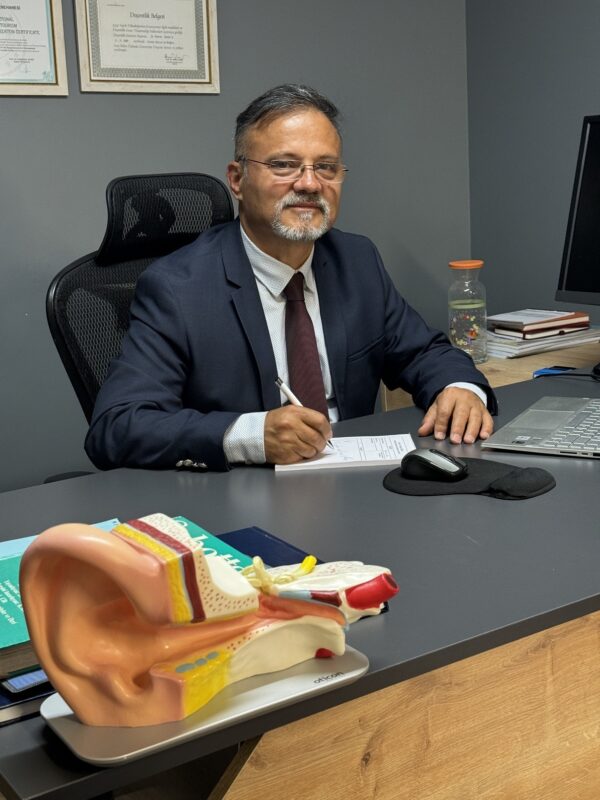
About Me
Prof. Dr. Fehmi Döner
ENT and Head & Neck Surgery Specialist
I completed my primary and secondary education in İzmir. I completed my medical education at Istanbul University Cerrahpaşa Faculty of Medicine in 1988. I received my specialization training at Atatürk University Faculty of Medicine, Department of Otorhinolaryngology. During my specialization training, in order to increase my knowledge and experience, I spent different periods of time at Istanbul University Istanbul Faculty of Medicine, Department of Otorhinolaryngology, and participated in clinical studies.
After receiving my specialization in 1994, I worked at Kütahya State Hospital for eight months, and then in December 1994, I was appointed as an assistant professor to the Department of Otorhinolaryngology at Süleyman Demirel University.
View MoreWhat Are the Basic Anatomical Differences Between the Male and Female Nose?
As a surgeon, my approach to a male patient is completely different from my approach to a female patient because the “material” we work with is fundamentally different. Without understanding the differences between male and female anatomy, achieving a successful result is almost impossible.
The most pronounced difference appears in the skin structure. Male skin is much thicker, more porous, and oilier than female skin. We call this “seborrheic skin.” This thick skin structure is both an advantage and a major disadvantage for the surgeon. It is an advantage because even if there is a millimetric error on the bone or cartilage, the thick skin covers it like a blanket and it does not show from the outside. However, the disadvantage is much greater; no matter how finely, delicately, and detailed we shape the cartilages inside, when we cover it with thick skin, those details may be lost. It is like covering a finely crafted sculpture with a thick velvet cloth; it becomes harder to see the details underneath. In addition, the lymphatic circulation of thick skin is slower, which causes postoperative edema, that is, swelling, to persist much longer in men.
When we look at the skeletal structure, we see a much more resistant structure in men. The bones are denser and the cartilages are harder. This stiffness may require us to apply more force when shaping the nose, but it also provides us with a solid point of support so that the nose does not collapse in the long term. While the cartilages are more delicate in women, in men they can be as solid as a building column.
The main structural features that distinguish the male nose from the female nose are as follows:
- Thicker dermis layer
- Higher sebaceous gland density
- Large-pored skin surface
- Strong and dense bone structure
- Hard cartilage matrix
- Wide nasal base
- More pronounced muscle attachments
How Is a Masculine Appearance Preserved in Male Rhinoplasty?
The question my male patients ask me most often in the clinic—rather, the question they ask with the most fear—is this: “Doctor, will my nose look feminine?” This is a very justified concern. Because if you make a feminine nose for a male face—curved, with a very upturned and thin tip—you change that man’s entire facial expression, the depth in his gaze, and even the social perception of him.
In male aesthetics, to preserve what we call “masculinity,” there are very strict geometric rules we must follow. The most important of these is the nasolabial angle, that is, the angle between the nasal tip and the upper lip. In women, this angle being wide, meaning the nose being slightly upturned, creates a pleasing appearance. However, in a man, we want this angle to remain around 90 degrees. In other words, the nose should stand perpendicular to the lip. If you increase this angle and raise the nose, the inside of the nostrils begins to be visible when viewed from the front. This appearance is popularly called a “pig nose,” and it is an extremely artificial look that we never want in a man.
Another critical point is the nasal dorsum. In women, a slight curve on the nasal dorsum, a sweet transition, is desired. In men, the ideal is a “straight” (straight dorsum) dorsum. A curve softens and weakens the expression on a male face. In fact, in some face types—especially in men with a strong forehead and chin—even leaving a millimetric hump on the nasal dorsum can look much more charismatic and natural than that perfectly straight “slide-like” rhinoplasty nose appearance. The aim is not for it to be understood that the person has had surgery, but to achieve the most natural form that suits the face best.
The main aesthetic parameters we pay attention to in a masculine rhinoplasty are as follows:
- Nasolabial angle between 90 and 95 degrees
- Straight nasal dorsum line
- Distinct nasal root transition
- Strong nasal tip support
- Natural nasal wing width
- Non-sharp transition lines
Can Functional Issues and Breathing Problems Be Solved Together with Aesthetics?
In male patients, aesthetic concerns rarely come alone; they almost always bring a breathing problem along with them. Falls in childhood, blows taken during football matches in youth, or fights… The male nose is exposed to trauma much more often. These impacts not only distort the shape visible from the outside, but also seriously damage the internal airways.
At this point, the most common condition we encounter is “septal deviation.” The curvature of this wall, which divides the nasal cavity into two and is cartilage in the front and bone in the back, dramatically reduces the patient’s quality of life. Complaints such as nighttime snoring, waking up tired in the morning, and getting congested quickly while doing sports are based on this. When we perform rhinoplasty surgery, we do not only correct the outside; we also repair these curvatures inside. We call this “septorhinoplasty.”
In fact, this is an opportunity for us. While correcting the curved cartilages inside, we never throw away the pieces we remove. These cartilages serve as perfect spare parts to support the nasal tip, lift collapsed areas, or strengthen weak wings. In other words, the tissue that prevents the patient from breathing turns into a building block that makes the nose look better.
In addition, the turbinates, that is, the “conchae,” also tend to enlarge frequently in men. Especially in allergic constitutions or on the side where there is a bone curvature, these turbinates swell and block the airway. During surgery, we reduce these turbinates with radiofrequency or laser technologies. The important thing here is not to cut and remove the turbinates completely. The turbinates have very important functions such as warming and humidifying the air. If you remove them completely, a very difficult condition called “empty nose syndrome” emerges, in which the patient feels unable to breathe even though the nose is open. Therefore, we adopt a tissue-respecting, preservation approach.
The main structures we intervene in functional surgery are as follows:
- Septal cartilage
- Inferior turbinates
- Middle turbinates
- Internal nasal valve
- External nasal valve
- Vomer bone
- Nasal polyp tissues
Contact us to get information about treatments and create an appointment!
What Are the Expectations and the Psychological Preparation Process Like Before Surgery?
A successful surgery is not done only with a scalpel; it starts in the mind first. The harmony between what the patient wants and what the surgeon can do is the key to success. Male patients are generally more clear and result-oriented. “Let my breathing open up, let that hump go away, but let no one understand I had rhinoplasty” is the most classic sentence I hear. However, sometimes expectations can drift away from reality.
In particular, one must be very careful against the risk of “Body Dysmorphic Disorder” (Dysmorphic Disorder). Alarm bells should ring for patients who see a millimetric imperfection in their nose as a huge flaw when they look in the mirror, who attribute all failures in their life to their nose, or who come with a celebrity photo and say, “I want exactly this nose.” The anatomy, skin, and skeletal structure of every face are unique like a fingerprint. Mounting someone else’s nose onto your face is not technically possible, nor would it look harmonious aesthetically.
At this stage, we benefit from the power of technology. 3D simulation devices and digital imaging systems are excellent tools that enable the patient and the surgeon to speak the same language. We take the patient’s photos and design the possible postoperative appearance on special software. When the patient sees on their own face how much the hump will be reduced and how much the tip will be lifted, the abstract expectation in their mind turns into a concrete plan. The word “natural” is relative; your understanding of natural may differ from mine. But the image on the screen is one, and it eliminates misunderstandings.
The issues we clarify in the preoperative consultation are as follows:
- Current breathing capacity
- Realistic aesthetic goals
- Limitations of skin quality
- Recovery process timeline
- Possible complication risks
- Analysis of facial asymmetries
- History of past trauma
What Advantages Does Ultrasonic Piezo Surgery Provide in Men?
Those frightening hammer and chisel sounds that used to come to mind when rhinoplasty was mentioned, and the bruised faces, are now history. Technology, as in every field of medicine, has created a revolution here as well, and “Ultrasonic Piezo Surgery” has entered our lives.
Piezo is an extremely intelligent system that works with the vibration of sound waves. The biggest feature of this device is that it is “tissue-selective.” What does that mean? The device is designed only to cut or shape hard tissues like bone. The moment its tip touches soft tissue, a vessel, or a nerve, it stops working or does not harm them. This is tremendous comfort for us.
Men’s bone structure is very hard and wide. With old methods, breaking these bones could both cause uncontrolled cracks and lead to serious bleeding and bruising. With Piezo, we do not break the bones; we cut them as if drawing with a pencil or rasp them like a sculptor. Because we can shape the bones with millimetric precision, the risk of improper bone healing during the recovery period decreases. Also, since we do not damage soft tissue, our patients express their surprise after surgery by saying, “Doctor, I had no pain at all, and my bruising was much less than I expected.”
The main advantages provided by ultrasonic Piezo technology are as follows:
- Soft tissue preservation
- Minimum bruising formation
- Precise bone cutting
- Controlled shaping
- Fast recovery process
- Lower risk of edema
- Smooth bone surface
What Is the Preservation Rhinoplasty Method and Why Is It Preferred?
In recent years, the philosophy of “less damage, more natural results” has begun to dominate in the surgical world. The counterpart of this philosophy in rhinoplasty is the “Preservation Rhinoplasty” method.
In the classic method, we cut and remove the hump on the nasal dorsum, then try to close the opened roof again. This is an effective method, but it disrupts the natural anatomy of the nasal dorsum. In preservation rhinoplasty, we do not touch the nasal dorsum at all, that is, that natural hump line. So how do we eliminate the hump? By removing bone and cartilage strips from the lower part of the nose, from its base, we lower the nose as a whole, like an elevator. We call these the “Let-down” or “Push-down” techniques.
This method has very big advantages for men. In the male nose, the smoothness and naturalness of the dorsum are very important. Since the nasal dorsum is not cut in the preservation method, the reflections of light and shadow are not disrupted, and an “operated” look does not occur. Also, since the nasal roof is not opened, the risk of developing irregularities we call “open roof deformity” in the future is eliminated. Healing is much faster because tissue integrity is preserved. However, not every nose is suitable for this technique; in noses that are very crooked or have very severe deformities, classic methods are still the gold standard.
The suitable candidate profile for preservation rhinoplasty is as follows:
- Those with a straight nasal dorsum
- Those with a mild or moderate hump
- Those without severe nasal deviation
- Patients who have not had surgery before
- Those with good nasal skin elasticity
Get in Touch!
Contact us to get information about treatments and create an appointment!
Is the Open or the Closed Technique More Suitable?
This question is one of the most debated topics in the rhinoplasty world. In fact, there is no such thing as the “best technique”; there is the “technique most suitable for the patient’s nose.” As surgeons, we have both techniques in our bag, and depending on the situation, we choose whichever will yield the best result.
In open technique rhinoplasty, we make a very small incision in the area between the two nostrils called the “columella” and work by lifting the nasal skin. This method allows us to see everything inside the nose, all asymmetries, all curvatures, with the naked eye. Especially in patients who have serious problems at the nasal tip, whose nose is very crooked, or who have had a previous unsuccessful surgery (revision), the open technique gives us complete control. The incision scar fades so much over time that most of the time even the patient has difficulty finding its place.
In closed technique rhinoplasty, all incisions are made from inside the nose, and there is no scar outside. The surgeon’s field of view is more limited; it is like designing a room through a keyhole. However, since the ligaments and vascular structures at the nasal tip are cut less, swelling is less, nasal tip sensation returns sooner, and recovery is somewhat faster. Especially in patients where only the hump will be removed and the tip will not be touched much, the closed technique provides great comfort.
The main factors that determine the choice of technique are as follows:
- Degree of nasal tip deformity
- Severity of nasal deviation
- Whether there is a need for revision
- Structure of the nasal skin
- Surgeon’s experience and preference
- Complexity of functional problems
Is Revision Rhinoplasty and the Use of Rib Cartilage Necessary?
Unfortunately, not every surgery may always yield the desired result. Sometimes due to an excessive reaction of healing tissue (scar), sometimes due to a blow taken after surgery, and sometimes due to insufficient surgical techniques, a second surgery may be needed. In men, the most common reason for revision we see is the nasal tip dropping over time or the nose being over-scooped and feminized.
Revision surgeries are always more difficult than the first surgery. Because the natural planes inside have been disrupted, the skin has formed adhesions, and most importantly, the septal cartilage that we will use to reconstruct the nose has been consumed in the first surgery. We have no material left. In such a case, to raise the nose firmly, to rebuild that collapsed roof, we have to take cartilage from another place in the body.
In this case, the most reliable, strongest source is the patient’s own rib cartilage. The rib is hard and durable enough to mimic the strong structure of the male nose. By carving the cartilage we take with a small incision under the right chest, with the meticulousness of a carpenter, we create a new nasal framework. Ear cartilage is also an option, but because ear cartilage is very soft and curved, it is generally insufficient to correct the nasal dorsum; it is more used in nasal tip shaping or camouflage procedures.
The graft sources used in revision surgery are as follows:
- Costal (rib) cartilage
- Auricular cartilage
- Cadaver cartilage (irradiated)
- Temporal fascia tissue
- Abdominal fat stem cells
What Should Be Considered During the Postoperative Recovery Process?
When the surgery is over, it means half of the work is done; the other half depends on the patient. The recovery process is a journey that requires patience. Especially in thick-skinned male patients, it can take longer for the nose to take its full shape than in women; sometimes this period can reach 1.5 – 2 years.
After surgery, we place perforated silicone splints inside the nose that allow breathing in and out. The painful stories of old, meters-long cloth tampons being removed are now history. We also place a protective plastic cast on the nasal dorsum. We usually remove these in the 1st week. When the splints are removed, there is great relief.
The first days are the days when edema is most intense. There may be facial swelling and mild bruising under the eyes. Keeping the head elevated, drinking plenty of water, restricting salt, and consuming anti-edema foods such as pineapple speed up this process. Our patients most often ask, “When can I do sports?” You can start light walks within a few days, but for weight lifting and sports that raise blood pressure, it is necessary to wait at least 1 month. Sports such as football, basketball, and boxing, where there is a possibility of a blow to the nose, are strictly prohibited for the first 6 months. Because even though the bones continue to fuse, it takes time for them to regain full strength.
In addition, protection from the sun is very important. Newly healing nasal skin is very sensitive to the sun and can stain easily. Wearing a hat and using a high-factor sunscreen is essential. The use of glasses is also not recommended for the first 2-3 months because it can put pressure on the bones and cause deformity.
Latest Posts

What Is a Failed Rhinoplasty? How Does It Happen? How Is It Recognized?
Prof. Dr. Fehmi Döner » General » What Is a Failed Rhinoplasty? How Does It [...]
Read More ➜
25
Feb
Feb
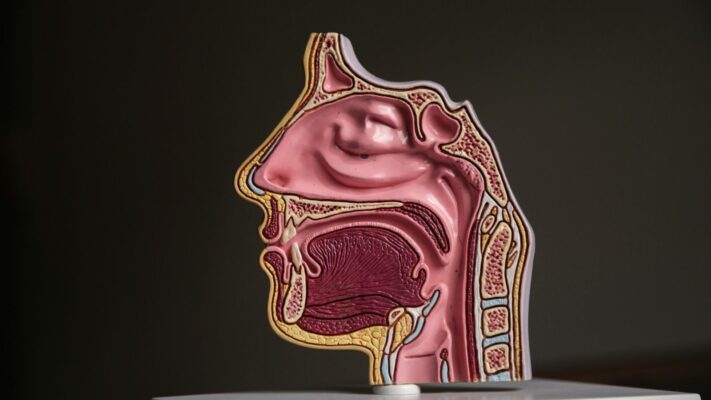
Nasal Anatomy and Its Functions
Prof. Dr. Fehmi Döner » General » Nasal Anatomy and Its FunctionsNasal anatomy consists of [...]
Read More ➜
25
Feb
Feb

What Is a Nose Type and What Are the Different Nose Types?
Prof. Dr. Fehmi Döner » General » What Is a Nose Type and What Are [...]
Read More ➜
25
Feb
Feb
My Nose Is Crooked After Rhinoplasty: What Should I Do?
Prof. Dr. Fehmi Döner » Rhinoplasty » My Nose Is Crooked After Rhinoplasty: What Should [...]
Read More ➜
23
Feb
Feb
Can Asymmetry of the Nostrils Occur After Rhinoplasty?
Prof. Dr. Fehmi Döner » Rhinoplasty » Can Asymmetry of the Nostrils Occur After Rhinoplasty?Asymmetry [...]
Read More ➜
23
Feb
Feb

Nasal Massage After Rhinoplasty
Prof. Dr. Fehmi Döner » Rhinoplasty » Nasal Massage After RhinoplastyNasal massage after rhinoplasty is [...]
Read More ➜
23
Feb
Feb

Swelling on the Nasal Bridge After Rhinoplasty
Prof. Dr. Fehmi Döner » Rhinoplasty » Swelling on the Nasal Bridge After RhinoplastySwelling on [...]
Read More ➜
23
Feb
Feb

What Should Be Considered After Rhinoplasty?
Prof. Dr. Fehmi Döner » Rhinoplasty » What Should Be Considered After Rhinoplasty?What to pay [...]
Read More ➜
23
Feb
Feb