

Piezo (Ultrasonic) Rhinoplasty in Turkey is an advanced nasal reshaping technique that uses ultrasonic vibrations to precisely cut and sculpt nasal bones without damaging surrounding soft tissues. This modern surgical method allows controlled bone modification, reduced trauma, and more predictable aesthetic and functional outcomes.
Ultrasonic rhinoplasty technology enables surgeons to reshape nasal bones with micrometric precision by using piezoelectric instruments instead of traditional chisels and rasps. This approach minimizes bruising, swelling, and soft-tissue injury, allowing a more refined surgical process and supporting improved postoperative recovery.
Piezo rhinoplasty in Turkey is widely performed in specialized clinics equipped with modern surgical infrastructure and experienced facial plastic surgeons. International patients frequently choose the country due to comprehensive treatment planning, accredited medical facilities, and adherence to internationally recognized surgical standards.
Recovery after ultrasonic rhinoplasty generally progresses more comfortably compared with conventional nasal surgery. Because the technique preserves surrounding tissues and vascular structures, patients often experience less edema and ecchymosis, enabling a smoother healing period and more stable long-term nasal contour results.
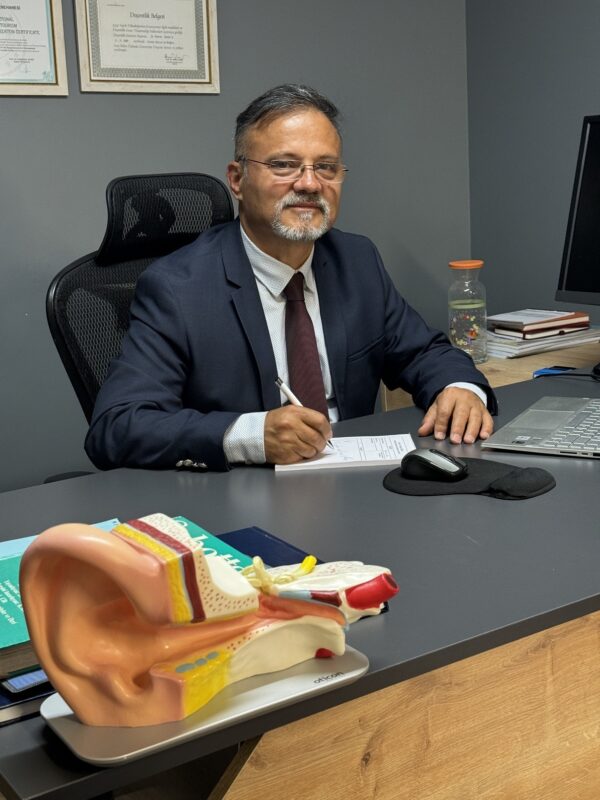
About Me
Prof. Dr. Fehmi Döner
ENT and Head & Neck Surgery Specialist
I completed my primary and secondary education in İzmir. I completed my medical education at Istanbul University Cerrahpaşa Faculty of Medicine in 1988. I received my specialization training at Atatürk University Faculty of Medicine, Department of Otorhinolaryngology. During my specialization training, in order to increase my knowledge and experience, I spent different periods of time at Istanbul University Istanbul Faculty of Medicine, Department of Otorhinolaryngology, and participated in clinical studies.
After receiving my specialization in 1994, I worked at Kütahya State Hospital for eight months, and then in December 1994, I was appointed as an assistant professor to the Department of Otorhinolaryngology at Süleyman Demirel University.
View MoreWhat Is Piezo Rhinoplasty and How Are Sound Waves Used?
Piezoelectric surgery is based on the principle of converting electricity into mechanical vibrations. It may sound very technical, but the logic is quite simple. The special crystals at the tip of the device receive electrical current and begin to vibrate thousands of times per second. These vibrations are so fast that they cannot be followed by the human eye—you can only hear the thin sound it produces. And these sound waves become our greatest power in surgery.
The most fascinating aspect of this technology is that it is “selective.” In other words, the device recognizes only hard tissue—bone. When it touches bone, it shapes it smoothly, as if cutting butter. But the moment it comes into contact with soft tissue, for example your finger, a vessel, or a nerve, it stops. It does not perform cutting; it only vibrates that soft tissue. This feature is a tremendous revolution in terms of surgical safety.
Unfortunately, the instruments we used in classical methods were not that smart. When we struck bone with a chisel, that tool could traumatize everything in its path—vessels, muscle, and even the periosteum. Now, with the power of ultrasonic waves, we can tell surrounding tissues, “You stay aside; I’m dealing only with the bone.”
The main components of the piezo device are:
- Main console unit
- Foot pedal
- Handpiece
- Different tip heads
- Saline tubing
What Are the Differences Between the Traditional Method and Piezo?
Sometimes our patients think, “Doctor, what happens if I choose the old method—after all, the nose gets smaller in both.” Of course you have a point; our goal is a beautiful nose. But the quality of the path to that goal is at least as important as the result itself. We can compare the classical method to a “construction site,” and the Piezo method to an “art studio.”
In traditional rhinoplasty, we use metal osteotomes and hammers to shape the bones. We expect the bone to break along a certain line. But human anatomy does not always behave as we expect. Sometimes the bone cracks not where we want, but where it finds a weak point. We call this an “uncontrolled fracture line.” This is the main reason for those small irregularities or indentations you may feel on the sidewalls of the nose after surgery.
With Piezo, the concept of “breaking” leaves our literature. We shape the bone by cutting, abrading, and filing. Control is 100% in the surgeon’s hand. Where the bone begins, where it ends, where the curve turns—we can adjust all of these as if drawing with a millimetric ruler. This precision directly affects the success of long-term outcomes.
The disadvantages of the classical method are:
- Risk of uncontrolled fracture
- Tissue damage
- Heavy bleeding
- Long recovery period
- Coarse shaping
Why Are Bruising and Swelling Less After Surgery?
The biggest question mark for anyone considering surgery: “When can I return to work or school? Will I bruise a lot?” In the past, we would say, “Yes, the first week may be a bit challenging; bruising is normal.” But with Piezo, this scenario has largely changed.
What we call bruising is actually blood leaking under the skin. In the classical method, when we break bone, the surrounding capillaries, periosteum, and muscle tissue are also damaged. This damage leads to bleeding, and that blood seeps between tissues and creates the familiar purple color. This is where Piezo’s soft-tissue-sparing feature comes into play. Since the device does not cut vessels, bleeding remains minimal. With minimal bleeding, bruising either does not occur or appears only as mild yellowing.
Edema, or swelling, is the body’s natural response to any surgical procedure and cannot be eliminated completely. However, the more you respect the tissue, the less the body reacts. In Piezo surgeries, because tissue trauma is very low, swelling resolves much faster. Our patients usually see their splints removed on day 7 and find a face that looks as if they never had surgery.
Factors that speed up recovery are:
- Vessel preservation
- Tissue respect
- Cold application
- Keeping the head elevated
- Lymphatic drainage
Why Is Piezo More Important in Thin-Skinned Patients?
In rhinoplasty, skin thickness is one of the most critical factors determining the quality of the result. Thin-skinned patients, in particular, always require more care from surgeons, because thin skin reveals everything underneath like a cover. It is like a satin sheet: it does not hide even the smallest speck of dust, wrinkle, or irregularity—on the contrary, it makes it visible.
With classical instruments, especially bone rasps, it is difficult to make the bone surface completely smooth. Sometimes those tiny irregularities that are not visible to the eye but can be felt by hand may become noticeable from the outside months later in thin-skinned patients. This can cause dissatisfaction.
Piezo tips, on the other hand, allow us to polish the bone surface. When removing the hump, we can shave the bone layer by layer, as thin as onion skin. We can make micron-level refinements until we achieve a glass-smooth surface to the touch. Thus, even in thin-skinned patients, it becomes possible to obtain a perfectly smooth nasal dorsum that looks as if it has always been that way.
The risks of thin skin are:
- Revealing irregularities
- Low camouflage ability
- Visible vascularity
- Tendency to redness
Contact us to get information about treatments and create an appointment!
Why Is Open Technique Surgery Necessary for Piezo?
To benefit from technology, we have to provide the working environment that technology requires. Piezo tips are designed to be used at a certain angle and under direct visualization. Therefore, when applying this method, we generally prefer the “open rhinoplasty” technique.
There is no need to fear the open technique; we enter through a millimetric incision on the small pillar between the nostrils (the columella). This incision is stitched so finely that after healing it is almost impossible to notice with the naked eye. So why open technique? Because “we cannot correct what we cannot see.”
When using Piezo’s sensitive tips, we want to fully expose the bony structure (we call this degloving) and see the curvature, asymmetry, and architecture of the bones directly. This wide field of view allows us to shape both sides equally and narrow the bony roof millimetrically. In the closed technique, where we work only through the nostrils, inserting the tips through narrow tunnels and using them with the same precision without seeing is technically very difficult and limits the device’s full potential.
The advantages of the open technique are:
- Wide field of view
- Full control
- Symmetry control
- Bleeding control
- Ease of graft placement
What Kind of Safety Does Piezo Provide in Revision Cases?
Patients who have previously undergone one or more nasal surgeries are understandably much more anxious. Questions like “Will it be corrected this time? What if it gets worse?” keep circling in their minds. Revision surgery is far more complex than the first operation because the “virgin” anatomy has been altered. Bones may have thinned, shifted, or fragmented fractures may have healed incorrectly. In addition, tissues may have adhered to one another and dense scar tissue has formed.
In such a chaotic environment, Piezo is like a “safe harbor” for us. Why? Because intervening on those thin, fragile bones left from a previous surgery with a classical hammer and chisel is very risky. With one blow, the bone can shatter completely. With Piezo, however, we can shape the bone by merely touching it, without applying pressure.
Separating tissues that have adhered from prior surgeries from the bone is also difficult. Thanks to Piezo’s soft-tissue-preserving feature, we can perform a safe dissection while releasing adhesions without damaging the vascular network on the bone or the skin. This significantly increases the recovery comfort and success rate of revision patients.
The challenges of revision are:
- Anatomical distortion
- Tissue adhesions
- Cartilage deficiency
- Changes in skin quality
- Impaired circulation
Can Nasal Obstruction and Functional Problems Be Solved With Piezo?
We talk a lot about aesthetics, but as an ENT specialist, my primary priority is always “breathing.” Even if we create the most beautiful nose in the world, if that nose cannot breathe, the patient is unhappy and the surgery is unsuccessful. Septal deviation, the most common cause of nasal obstruction, often involves not only the cartilage part but also the bony part further back:
Especially in very deep areas near the skull base, it is difficult to break bony protrusions (the vomer crest) with classical methods, and it can sometimes cause serious bleeding. Thanks to Piezo’s long and thin tips, we can reach the deepest points of the nose and shave these bony deviations without damaging the mucosal lining over them.
What does this mean? Since the mucosa is not injured, postoperative crusting inside the nose is much less. With less crusting, nasal obstruction resolves faster and healing accelerates. In addition, in cases where the turbinates (conchae) have bony enlargement, we can also reduce them with this device. In other words, Piezo not only improves the “showcase,” but also makes the “inside of the shop” more comfortable.
Functional problems include:
- Septal deviation
- Concha bullosa
- Bony spur
- Valve narrowing
Get in Touch!
Contact us to get information about treatments and create an appointment!
What Should the Patient Expect During the Recovery Process?
The surgery is over and you are in your room. So what kind of process awaits you? The most notable difference we observe in our patients who undergo Piezo surgery is postoperative comfort. You stay in the hospital for the first night. The reason is both to monitor you closely and to apply cold therapy professionally.
Do not worry about pain; most of my patients describe not pain, but a fullness sensation as if they have the flu. Simple painkillers are more than sufficient during this period. The first 48 hours are when swelling is most pronounced, so we ask you to keep your head elevated and rest plenty.
In the past, meters of gauze packing were stuffed into the nose, and removing them was a nightmare for patients. This is now history as well. Because tissue damage is low in the Piezo method, bleeding risk is lower; therefore we place only silicone sheets (splints) inside the nose. The middle of these silicone splints is perforated, meaning you can breathe even right after surgery. Removing them is a painless process that takes seconds. We usually remove the cast on the nose at the end of the first week, and that moment becomes your first meeting with the “new me.”
The stages of recovery are:
- Hospital monitoring in the first 24 hours
- Return home on the second day
- Peak swelling on the third day
- Splint removal on the seventh day
- Return to social life on the tenth day
How Are Heat Control and Safety Ensured During the Operation?
Even though we praise Piezo, every medical device has points that require attention. It is the surgeon’s job to manage these risks. Because the Piezo device vibrates thousands of times per second, friction at the tip generates heat energy. If this heat is not managed properly, there may be a risk of thermal damage (burn) to the bone or skin.
But do not worry—technology has thought of this as well. The device has an integrated cooling system. Every second we work, cold saline solution is sprayed from the tip onto the area. This system has two great benefits: first, it prevents heating by continuously cooling the bone. Second, it continuously irrigates the surgical field, clears blood, and provides us with crystal-clear visibility.
In addition, we surgeons work “dynamically” while using this device. In other words, we never keep the tip fixed in one spot; we keep it moving continuously. You can think of it like ironing: you do not hold the iron still on the fabric; you keep moving it. Thanks to this technique and the cooling system, the risk of thermal damage is eliminated and safe surgery is ensured.
Safety protocols are:
- Continuous irrigation
- Dynamic tip movement
- Correct tip selection
- Power setting control
- Tissue-protection maneuvers
Who Is Suitable for Piezo Rhinoplasty?
In fact, the Piezo method is suitable for almost any rhinoplasty candidate who needs bone shaping. However, in some situations the advantages of this technology become much more pronounced. For example, in patients whose nasal bones are very wide and flat, extremely precise cuts are required to narrow the bones. Piezo works wonders here.
Likewise, in “traumatic noses,” where the nose has previously been broken due to an accident or impact and has healed crooked, the bony structure is very irregular. Correcting this irregularity with classical instruments is difficult, whereas with Piezo we can correct those crooked areas one by one by shaving them. Aquiline noses, asymmetric noses, and noses tilted to the right or left are also among the most common areas where this technology is used.
As for age limits, any individual whose bone development is complete (generally 18 years and older) can undergo this surgery. What matters is that your overall health is suitable for anesthesia. Smoking, as in all surgical procedures, is also undesirable here because it reduces healing quality.
Suitable candidates include:
- Aquiline nasal structure
- Wide nasal base
- Deviated nasal axis
- Traumatic deformities
- Those who need revision
Latest Posts

What Is a Failed Rhinoplasty? How Does It Happen? How Is It Recognized?
Prof. Dr. Fehmi Döner » General » What Is a Failed Rhinoplasty? How Does It [...]
Read More ➜
25
Feb
Feb
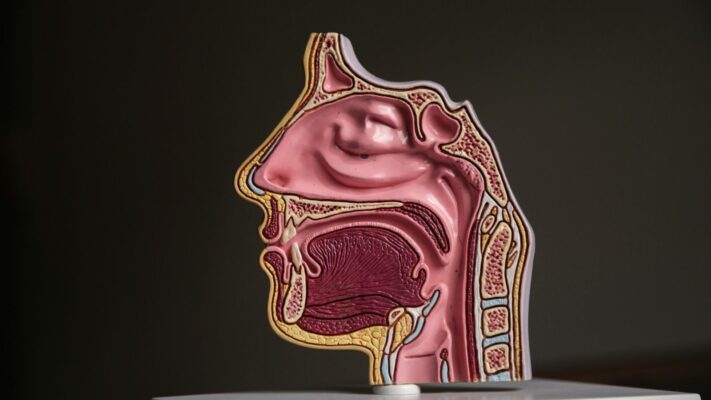
Nasal Anatomy and Its Functions
Prof. Dr. Fehmi Döner » General » Nasal Anatomy and Its FunctionsNasal anatomy consists of [...]
Read More ➜
25
Feb
Feb

What Is a Nose Type and What Are the Different Nose Types?
Prof. Dr. Fehmi Döner » General » What Is a Nose Type and What Are [...]
Read More ➜
25
Feb
Feb
My Nose Is Crooked After Rhinoplasty: What Should I Do?
Prof. Dr. Fehmi Döner » Rhinoplasty » My Nose Is Crooked After Rhinoplasty: What Should [...]
Read More ➜
23
Feb
Feb
Can Asymmetry of the Nostrils Occur After Rhinoplasty?
Prof. Dr. Fehmi Döner » Rhinoplasty » Can Asymmetry of the Nostrils Occur After Rhinoplasty?Asymmetry [...]
Read More ➜
23
Feb
Feb

Nasal Massage After Rhinoplasty
Prof. Dr. Fehmi Döner » Rhinoplasty » Nasal Massage After RhinoplastyNasal massage after rhinoplasty is [...]
Read More ➜
23
Feb
Feb

Swelling on the Nasal Bridge After Rhinoplasty
Prof. Dr. Fehmi Döner » Rhinoplasty » Swelling on the Nasal Bridge After RhinoplastySwelling on [...]
Read More ➜
23
Feb
Feb

What Should Be Considered After Rhinoplasty?
Prof. Dr. Fehmi Döner » Rhinoplasty » What Should Be Considered After Rhinoplasty?What to pay [...]
Read More ➜
23
Feb
Feb